

Resident Evil is one of the most successful horror franchises in video game history. The modern remakes of Resident Evil 2, 3, and 4, in particular, have thrilled millions of players. Yet one question has been on fans’ minds for years: Why did Capcom choose to start the remakes with the second installment of all things, skipping the origins of the series? Now, Executive Producer Jun Takeuchi has provided a surprisingly candid explanation. Apparently, Capcom had doubts as to whether the original horror concept would still resonate with today’s audiences.
The statements come from the Japanese anniversary book “Biohazard 30th Special,” which was published to mark the 30th anniversary of the franchise.
In it, Takeuchi discusses the decisions behind Capcom’s remake strategy and explains why Resident Evil from 1996 was not chosen as the basis for the modern reboot.
Das könnte dich auch interessieren


Capcom considered Resident Evil 1 too restrained
The main reason apparently lies in the original’s distinct gameplay feel.
Resident Evil from 1996 relied on slow-paced exploration, limited resources, and an oppressive atmosphere within a largely self-contained setting.
Instead of constantly presenting new enemies and spectacular action sequences, the game frequently built its horror through uncertainty.
Every opened door could hide a threat. Ammunition was scarce, and even saving progress required a limited resource using the familiar ink ribbons.
It was precisely these qualities that made Resident Evil so special back then.
From Capcom’s perspective, however, they also posed a risk.
In the anniversary book, Jun Takeuchi essentially describes the original game as very sober and restrained.
Because the horror stems so heavily from this atmosphere and the slow pacing, they worried that the concept might no longer resonate sufficiently with modern players.
With this, Capcom is providing a concrete explanation for the first time for a decision that seems quite unusual at first glance.
Why Resident Evil 2 was the better choice
For the reboot of the remake series, Capcom opted for Resident Evil 2 instead.
The game was originally released in 1998 and moved the story out of the isolated mansion and into the zombie-overrun city of Raccoon City.
With Leon S. Kennedy and Claire Redfield, it focused on two main protagonists.
The plot offered significantly more varied locations, spectacular encounters, and a larger-scale disaster as a backdrop.
From the developers’ perspective, that is precisely what made the second installment a more suitable starting point.
Takeuchi also explains that the events in Raccoon City represent, in a sense, the actual beginning of the broader Resident Evil saga.
However, this is a narrative assessment and does not mean that the events of the first game are suddenly unimportant.
After all, crucial foundations of the plot surrounding Umbrella and the biological experiments were laid in the Spencer Mansion.
Nevertheless, Resident Evil 2 showed the catastrophic impact of these proceedings on an entire city for the first time.
For players new to the franchise, this arguably made the world feel more immediate and impactful.
Resident Evil 1 already received a remake in 2002
An important point must not be forgotten in this discussion.
Resident Evil 1 was by no means completely ignored.
Back in 2002, Capcom released an extensive reimagining for the Nintendo GameCube.
This version overhauled the graphics, added new content, and expanded various areas of the Spencer Mansion.
Even so, the original gameplay feel was largely preserved.
Fixed camera angles, slow exploration, scarce resources, and the characteristic controls remained part of the concept.
Later, the remake was also released as an HD version for additional platforms.
As a result, it differs significantly from the newer remakes, which offer a much more comprehensive technical and gameplay reinterpretation using the RE Engine and a modern over-the-shoulder camera.
Anyone wishing for a Resident Evil 1 in the style of the Resident Evil 2 Remake today is therefore still waiting for a corresponding announcement.
A new Resident Evil 1 remake remains possible
Takeuchi’s comments are also interesting due to rumors from earlier this year.
Back in March 2026, we reported on indications suggesting that Capcom might once again be working on a reimagining of the first Resident Evil.
The well-known insider Dusk Golem claimed at the time that the project was in an early development phase.
Several years could still pass before any potential release.
You can find the background details in our article Resident Evil 1 Remake reportedly in development.
This project has not been officially confirmed to this day.
Nor do Jun Takeuchi’s recent statements constitute an announcement.
He is merely explaining why Capcom initially chose other games for the modern remake series.
It cannot be deduced from this that their original concerns still persist in the exact same way today.
Capcom is pursuing a bigger plan with the remakes
For the Japanese publisher, the remakes have long since become more than just individual nostalgia projects.
In October, Takeuchi already stated that Capcom is pursuing two parallel development directions with the classic remakes and the new Resident Evil games.
While new mainline entries continue the current storyline, the remakes are intended to modernize older events and tie them more closely into the overarching narrative in the long term.
We reported on this in detail in our article Resident Evil before the grand finale? Capcom talks about secret ten-year plan.
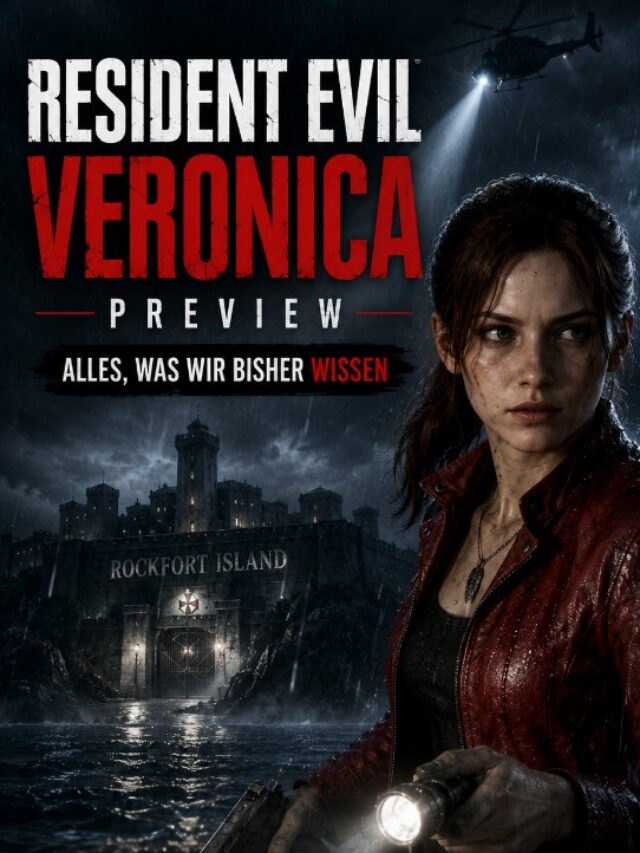
The next officially announced step is Resident Evil Veronica, which is scheduled for release in 2027.
Featuring Claire Redfield, Chris Redfield, and Albert Wesker, this reimagining revisits key characters and conflicts from the original series.
Further remakes could follow after that.
Resident Evil 0, Resident Evil 5, and Resident Evil 6 are also regularly discussed as potential candidates.
However, which games Capcom will actually choose next is currently unknown.
Was Capcom’s decision really the right one?
In hindsight, the decision at the time is certainly understandable.
The 2019 Resident Evil 2 Remake became the ideal entry point into the horror series for many players.
The modernized controls, the impressive depiction of Raccoon City, and the successful blend of action and survival horror appealed to both veteran fans and new players alike.
Nevertheless, an interesting counter-question remains.
Particularly the oppressive atmosphere and slow pacing of the first Resident Evil could hold a special appeal once again today.
After all, modern horror games have long demonstrated that not every title has to rely on constant action.
Resident Evil 7 also proved in 2017 how effective a smaller, self-contained game environment can be.
We already reported on its originally very different development direction in our article Resident Evil 7 was supposed to be completely different and The Last of Us of all things played a major role.
Perhaps Capcom would evaluate entering the Spencer Mansion completely differently today than they did a few years ago.
In any case, Takeuchi’s new statement shows that there was more thought behind the order of the remakes than just the popularity of individual games.
Whether the origins of the series will ever return with modern technology remains to be seen.
Let us know your opinion in the comments.