


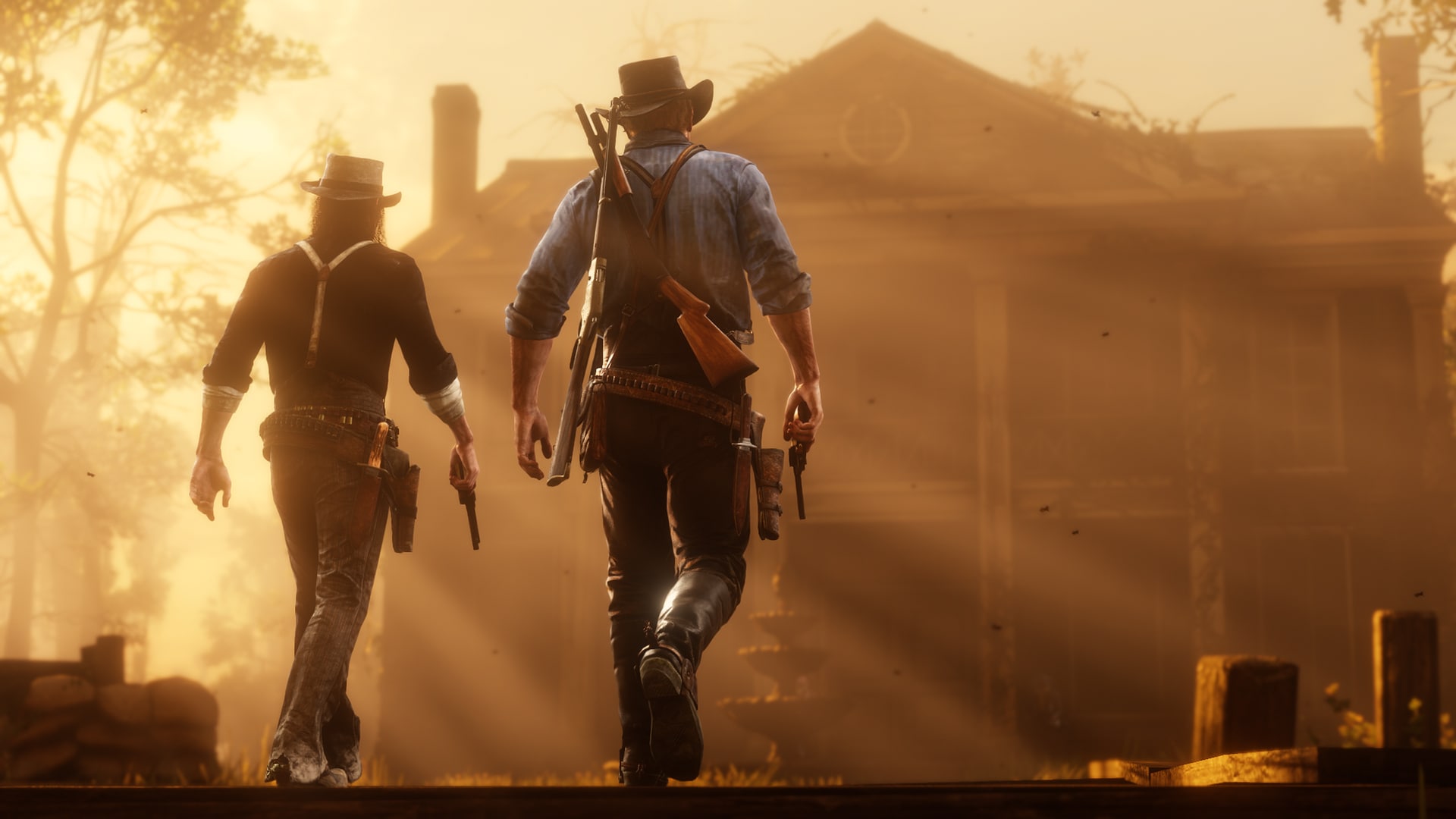
Red Dead Redemption 2 remains one of the most ambitious projects in video game history. However, the acclaimed Western adventure carried a workload that even Rockstar Games never wants to repeat. In a recent interview with Bloomberg, Head of Publishing Jennifer Kolbe said those experiences prompted a fundamental shift in thinking. With GTA 6, many processes will be handled differently.
Her comments arrive just weeks before the launch of the new Grand Theft Auto and offer a glimpse into the changes sweeping Rockstar. While GTA 6 is set to be far larger and more technically demanding than earlier entries, the studio also aims to leave behind the extreme overtime culture of past years.
Red Dead Redemption 2 marked a turning point for Rockstar.
When Red Dead Redemption 2 launched in October 2018, critics praised its detailed world, animations, and expansive story. However, reports of intense overtime, high time pressure, and so-called “crunch” periods during development also sparked widespread discussion.
Das könnte dich auch interessieren


“Crunch” refers to periods when developers log extreme overtime for an extended stretch to meet a deadline, a practice that can burden employees, especially on large-scale games.
According to Kolbe, finishing Red Dead Redemption 2 was a pivotal moment for Rockstar. The company realized it did not want to develop its next major project the same way. As a result, the team began GTA 6 with a mandate to change internal processes.
Rockstar acknowledges that not everything is going perfectly
Kolbe does not present the changes as a total success. She says conditions have improved since Red Dead Redemption 2, yet some employees may still experience very heavy workloads. Rockstar does not claim that GTA 6 development was free of difficult phases.
Instead, she describes ongoing efforts to reduce stress and reorganize production. Her statements do not allow an independent assessment of whether these measures worked for every team, yet the report shows that Rockstar has addressed past criticism.
At the same time, GTA 6 kept getting bigger
The challenge for the development studio was to improve workflows while technical complexity continued to rise. GTA 6 is set to feature the series’ largest and most detailed open world to date. In addition to the two main characters, Jason and Lucia, the focus is particularly on the vibrant streets of Vice City and the numerous interactions within the game world.
Rockstar is investing considerable effort into animations, dialogue, and NPC behavior. Developers say dedicated teams work solely on background conversations to make Leonida feel like a believable world. These exchanges are not limited to what players overhear directly.
Even casual dialogue overheard on a bustling street is deliberately crafted. The scope is so vast that even brief snippets are treated as essential atmosphere.
There Are No Easy Shortcuts for the World of GTA 6
Rockstar’s open-world writer James Horton told Bloomberg that superficial details can’t replace a believable world.
Every area must hold up to close inspection, which means passersby should look natural at a glance and carry convincing conversations when the player listens in. This attention to detail partly explains why development takes so long. For Rockstar, it’s a tricky balancing act.
Rockstar must keep technical and creative standards high while preventing the kind of excessive workload that plagued earlier projects. Adding more staff alone does not solve the problem, because complex development processes still need coordination and new hires require time to collaborate.
GTA 6’s development has fundamentally transformed Rockstar.
A new Bloomberg investigation by Jason Schreier shows just how deep the restructuring went. Rockstar has grown significantly since Red Dead Redemption 2, and the team also changed the original GTA 6 concepts, narrowing the focus to Vice City and the state of Leonida.
We’ve already covered the challenging development process and the earlier “Project Americas” concept in our reporting on the scrapped GTA 6 content.
The new report adds employee experiences, showing that the lengthy development was not driven only by technology or map size; internal structures also had to evolve to handle rising complexity.
Does this mean fewer overtime hours for future games?
Whether Rockstar will maintain its new way of working in the long term remains to be seen in future productions. While those in charge emphasize that the development of GTA 6 was organized more deliberately, this does not guarantee that upcoming projects will be created entirely without particularly intense work phases.
The still-controversial mandatory office attendance policy and disputes with employees also show that working conditions at Rockstar are not free of conflict. Nevertheless, the current statements are noteworthy. One of the world’s most famous development studios publicly acknowledges that the production methods used for one of its most successful games should not serve as a model for the future.
GTA 6 Could Also Set New Standards Behind the Scenes
When it launches, players will judge GTA 6 mainly on its graphics, story, and gameplay. For Rockstar, though, the title may matter just as much for what happens behind the scenes. The development cycle had to prove that an exceptionally ambitious game could be made without repeating the studio’s previous extreme working conditions.
Jennifer Kolbe sees progress but acknowledges that challenges remain. GTA 6 is scheduled for release on November 19, 2026, for PlayStation 5 and Xbox Series X|S. The approach’s long-term success will depend on how Rockstar applies the lessons learned from this production to future games. Let us know your thoughts in the comments.