


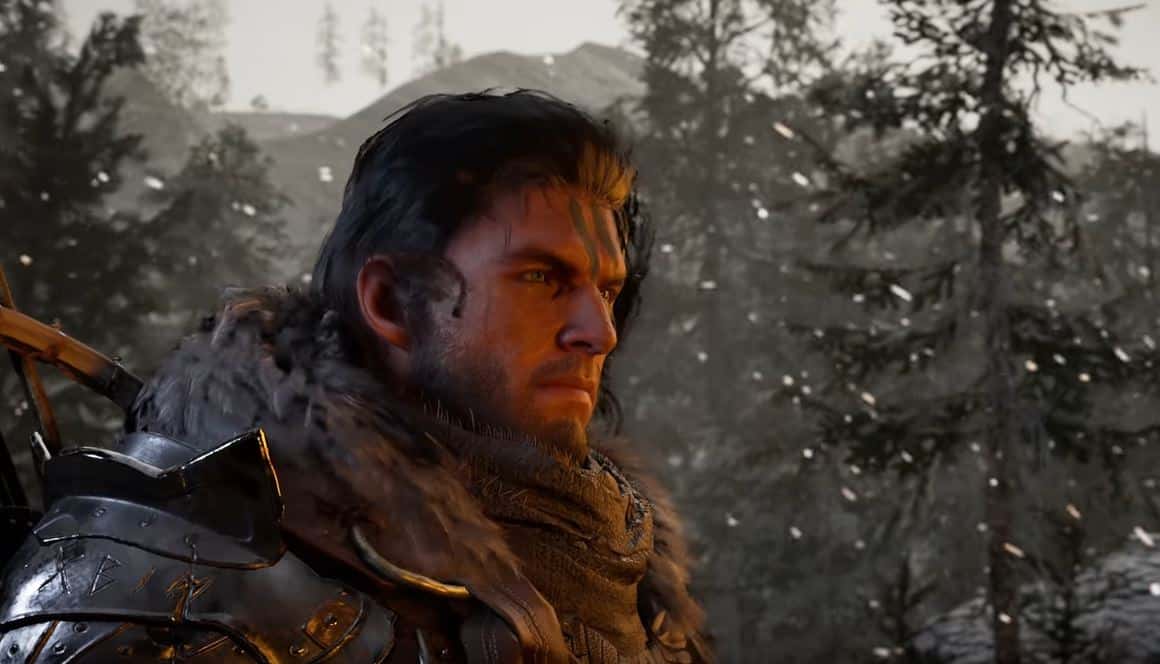
Crimson Desert has impressed players with the sheer scale of its open world, but developer Pearl Abyss apparently never wanted Pywel to simply look huge or beautiful. Speaking at Gamescom Dev, the team revealed one of the most important principles that shaped the world during development.
Massive open worlds are hardly unusual anymore. Mountains on the horizon, enormous cities, and spectacular landscapes can look impressive, but in many games, some of those locations ultimately serve as little more than scenery.
With Crimson Desert, Pearl Abyss wanted to avoid exactly that.
Das könnte dich auch interessieren



The basic philosophy was relatively simple: if players can see something interesting in the distance, they should ideally be able to actually go there.
Crimson Desert wants players to „Trust the Horizon“
During a presentation at Gamescom Dev, developers from Pearl Abyss discussed the creation of Pywel and the challenges involved in building such a large playable world.
One particularly interesting phrase emerged from the presentation: „Trust the Horizon.“
The idea is that players should eventually learn that distant locations aren’t simply decorative backdrops.
If you can see an interesting building, mountain, structure, or other landmark far away, the world should encourage you to set off and explore it.
According to the developers, establishing that trust was „worth more than almost anything else we did.“
In other words, Pywel wasn’t designed simply to appear enormous. Pearl Abyss wanted its scale to feel believable because players can actually interact with and explore the world they see around them.
The environment itself had to become content
Environment Artist Geuntae Ahn also explained that the team didn’t want environments to exist purely as backgrounds.
The world itself needed to become part of the content.
That may sound obvious for an open-world game, but achieving it presented Pearl Abyss with several challenges during development.
A visually spectacular landscape doesn’t automatically make for an enjoyable playable environment.
The developers therefore had to ensure that Crimson Desert’s enormous areas worked technically, could be explored in meaningful ways, and didn’t simply leave players looking at impressive scenery they couldn’t actually reach or interact with.
According to the team, there were situations during development where an environment looked impressive visually but simply didn’t work well enough from a gameplay perspective.
A massive open world isn’t enough
That’s what makes Pearl Abyss‘ approach to Crimson Desert particularly interesting.
Pywel includes a wide variety of biomes, massive cities, dungeons, and even areas located high above the ground.
But for the developers, the size of the world was apparently only part of the challenge.
The more important goal was creating the feeling that something genuinely exists beyond the horizon.
That’s an important distinction for modern open-world games. A gigantic map doesn’t necessarily mean much if large parts of it exist primarily as scenery or offer little reason for players to explore them.
Crimson Desert instead attempts to connect the world players can see with the world they can actually experience.
If Pearl Abyss succeeds, spotting something interesting in the distance shouldn’t make players wonder whether they can reach it.
It should make them wonder what they’ll find when they get there.
And according to the developers, earning that trust from players became one of the most important goals behind the creation of Crimson Desert’s massive world.
What do you think? Do you prefer enormous open worlds like Crimson Desert, or would you rather have a smaller but more densely packed map? Let us know in the comments.