


The Division 3 is officially in development, but Ubisoft continues to keep its next online shooter tightly under wraps. Ever since its announcement in September 2023, fans have been waiting for a proper first trailer, gameplay footage, and concrete details regarding the setting. In early 2026, a high-ranking developer described the project as an absolute “monster,” though he left the company shortly thereafter. Since then, there have been new job postings, restructuring at Massive Entertainment, and widespread speculation about the future of the franchise. We have gathered the most important developments, official statements, and rumors to take a close look at what players can genuinely expect from The Division 3.
The Division 3 has been announced since 2023 and yet remains a secret
September 21, 2023, started out as a pretty good day for many Division fans. Ubisoft officially confirmed that Massive Entertainment is working on The Division 3. At the same time, it was revealed that Julian Gerighty would oversee the entire brand going forward as executive producer.
Excitement was high, especially since the community had been wondering for quite some time whether a third main installment would ever happen.
Das könnte dich auch interessieren



However, there was a catch: Ubisoft showed practically nothing.
No proper trailer, no screenshots, no new setting, and certainly no gameplay. Instead, the company talked about the future of the franchise and building up the development team.
That was more than three years ago.
Naturally, a large-scale online game requires a lengthy development cycle. Even so, it is remarkable how little concrete information Ubisoft has shared since the announcement.
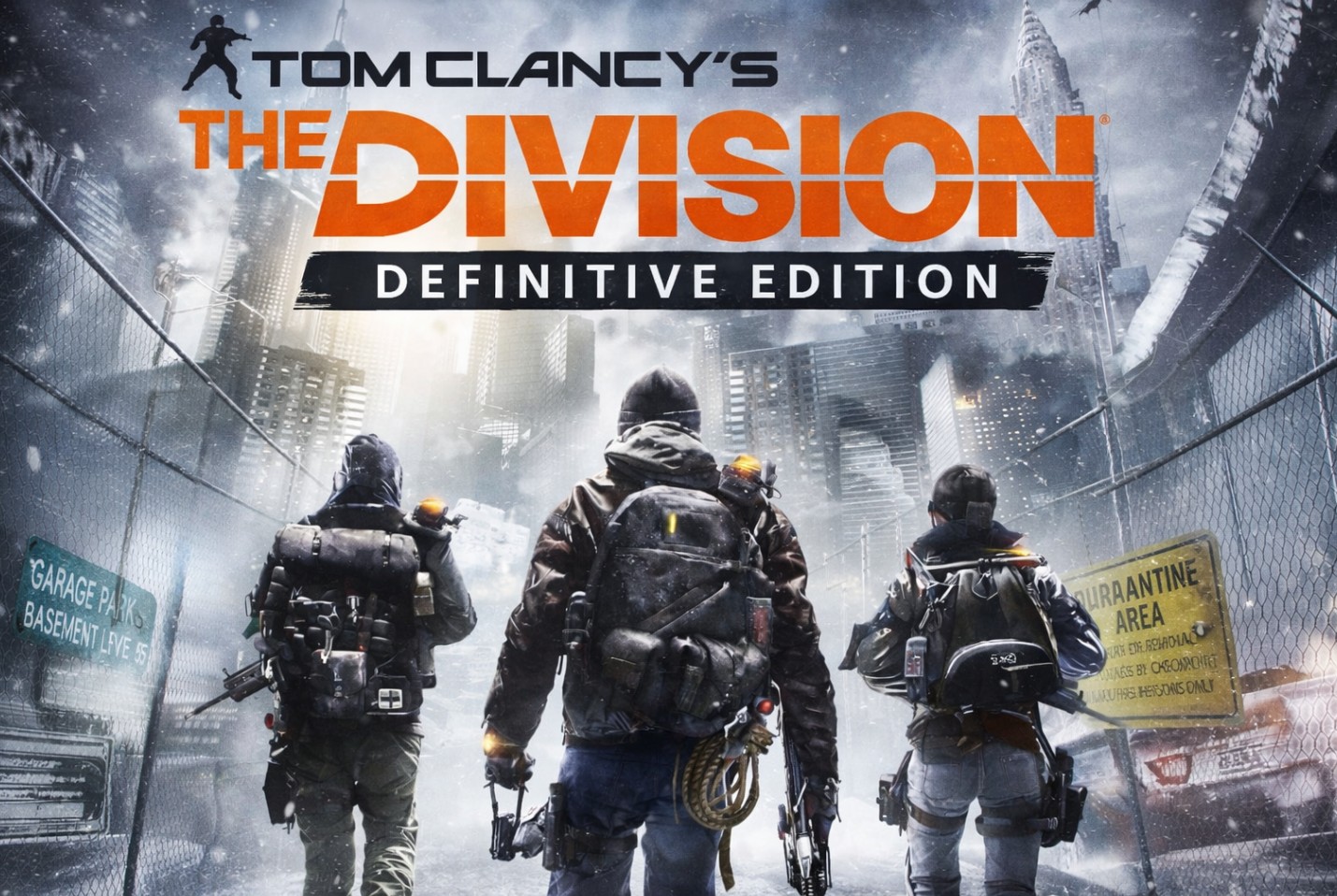 While other major productions at least occasionally receive new screenshots or brief glimpses, The Division 3 remains largely invisible to the public.
Yet the interest is undoubtedly there. The first two games still maintain a dedicated community that has spent years discussing a potential successor.
The fact that the franchise can still mobilize players was already evident in March 2026. At the time, a new roadmap sparked a significant surge in player numbers for The Division 2 on Steam.
The only problem is that when official information is lacking, rumors and speculation inevitably take over the news cycle.
And by now, there is plenty of that surrounding The Division 3.
Ubisoft talks about a monster and fuels high expectations
One of the most significant moments in the development history so far occurred in January 2026.
Julian Gerighty, who was still the executive producer of the series at the time, discussed the status of The Division 3 during the New Game+ Showcase.
His statement was remarkable. The project was shaping up to be a “monster,” Gerighty explained. Furthermore, the team was working on something that he believed could have an impact of a similar scale to the original The Division.
Those are some pretty lofty words.
After all, the original The Division was an exceptionally important title for Ubisoft. Its initial presentation at E3 2013 drew massive attention with its striking portrayal of an abandoned New York City.
When the game finally launched in March 2016, it combined an open game world with cooperative missions, an extensive gear system, and the hazardous Dark Zone.
Not everything worked perfectly at launch. Even so, it evolved into a franchise that still boasts an active player base a decade later.
So when Gerighty holds out the prospect of a comparable impact for part 3, the bar is set exceptionally high.
However, that statement should be put into proper perspective.
A “monster” can mean many things. A larger game world, more missions, more complex systems, or simply an especially resource-heavy development project.
Gerighty did not reveal what he specifically meant by this.
We already reported extensively on his statements at the time in our article The Division 3 picks up momentum as Ubisoft talks about a monster project.
To this day, however, a presentation that allows us to actually put these grand promises to the test is missing.
First big promises, and then Julian Gerighty leaves Ubisoft
The story took a surprising turn just a few days later.
None other than Julian Gerighty, who had just described the project with such confidence, left Ubisoft to join Electronic Arts.
There, he joined Battlefield Studios.
For many Division fans, this move came as an unexpected development. After all, Gerighty had accompanied the series for years and was slated to coordinate its further development as executive producer.
Of course, the departure of a single developer does not automatically mean an entire game is in trouble.
Particularly in major productions, responsibilities and decisions are spread across numerous staff members. A project of this scale normally does not depend entirely on one individual.
Even so, the timing was notable.
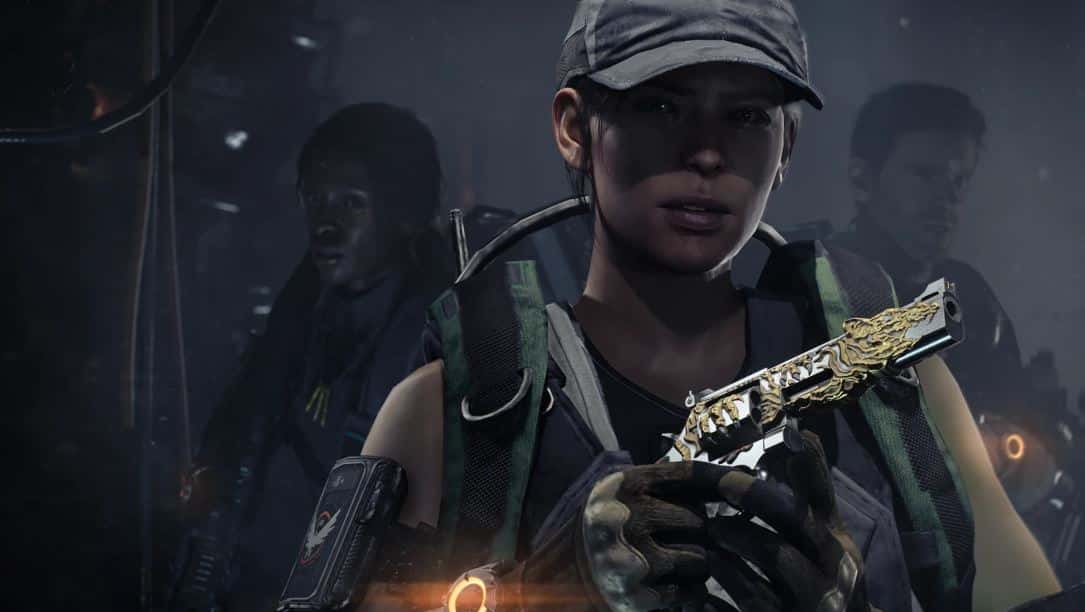 Anyone who talks about a potentially groundbreaking game just days prior and subsequently leaves the company inevitably leaves questions behind.
Ubisoft responded relatively quickly, however.
The company stated that the teams would continue working on The Division 2, The Division 3, and the brand’s other ongoing projects.
Later on, Senior Producer Fredrik Brönjemark also weighed in.
According to his statements, the roadmap for The Division 3 had been planned and secured for quite some time. The developers knew the direction they wanted to take and the goals they intended to achieve.
With this, Ubisoft made it clear that Gerighty’s departure was not equivalent to the end of the project.
Whether things nonetheless shifted behind the scenes cannot be judged from the outside.
In any case, a complete realignment or even a reboot of development was never confirmed.
New job postings provide clues about development
In June 2026, there was another sign of life.
Ubisoft published several job openings for The Division 3. Among other things, they were looking for experienced staff in game design, artificial intelligence, and animation.
These included positions such as Lead Game Designer, Senior AI Game Designer, and Animation Director.
Such job listings are certainly of interest to fans.
They show which areas a development studio is working on or where it requires additional support.
The search for specialists in enemy AI, in particular, could point toward extensive work on enemy behavior and how they interact with the game world.
That would be quite relevant for The Division.
The series thrives not only on its weapons, but also on how enemies utilize cover, put pressure on players, and cooperate during larger firefights.
However, one cannot reliably deduce which specific features will ultimately end up in the finished game based solely on a job posting.
A sought-after AI designer, for instance, does not automatically mean Ubisoft is developing a completely new enemy system.
Nor do new hires prove that a release is imminent.
Large studios frequently look for additional personnel across various phases of development.
We already covered those developments at the time under the title The Division 3 is apparently picking up steam.
For the public, the job postings were primarily a sign that work on the project was actively ongoing.
Massive Entertainment restructured as Ubisoft doubles down on major brands
Late September 2026 brought the next major change.
Ubisoft announced that several development teams would henceforth operate under a unified Massive Entertainment structure.
This includes locations in Sweden, Montreal, Paris, and Toronto.
Alongside The Division, this unit’s portfolio also features Ghost Recon, Splinter Cell, and new projects like March of Giants.
It is headed by Christoph Hartmann.
The goal is to pool expertise and technical resources more effectively across the studios.
For The Division 3, this could fundamentally offer advantages.
Developing comprehensive online games requires numerous specialists. These include experts for networking, game design, animation, artificial intelligence, and long-term live-service content.
When different teams collaborate more closely, experiences and technologies can potentially be utilized more efficiently.
Yet one should not prematurely break out the champagne here either.
A new organizational structure guarantees neither a better game nor a faster release.
 Ubisoft has been undergoing an economic and organizational transformation for quite some time. This also includes cost-cutting measures and layoffs.
Merging multiple studios under a single name can therefore have both creative and financial motivations.
The financial pressure became particularly evident back in January, when Ubisoft announced further layoffs at Massive Entertainment.
Above all, the crucial takeaway is this: Massive Entertainment remains a part of Ubisoft.
There is no confirmation that The Division 3 has been sold, canceled, or handed over to an outside studio.
We already reported extensively on the new structure in our article The Division 3 remains a secret, but Ubisoft is reshaping the future of the series.
The Division 3 Release: Is the game really not coming until 2028?
Let us turn to the question that is likely on the minds of most players.
When is The Division 3 coming out?
The short answer is sobering: We do not know.
As of November 7, 2026, Ubisoft has neither named a specific release date nor an official release year.
Even so, the year 2028 crops up with particular frequency in discussions.
At present, this is more of a timeline estimate than a reliable leak.
The reasoning behind it is understandable.
The game was announced in 2023, new staff were still being hired in 2026, and a first gameplay trailer is still missing.
Since large online games require several years of development time, a later release date certainly seems plausible.
However, caution is warranted.
We do not know how far along Massive Entertainment actually is with development. Nor is it known which systems have already been finalized or whether a comprehensive playable build already exists internally.
Consequently, the possibility of a release in 2027 cannot be definitively ruled out either.
The deciding factor will be when Ubisoft showcases major portions of the game to the public for the first time.
A trailer alone, however, does not necessarily mean an imminent release date.
Particularly with complex multiplayer games, many months can pass between an initial gameplay presentation and the actual launch.
This is why 2028 remains a plausible projection rather than a confirmed release date.
Is The Division 3 coming to PS5 or only to PlayStation 6?
Ubisoft is playing its cards remarkably close to the chest when it comes to platforms as well.
No binding list has been published yet detailing which systems The Division 3 will appear on.
A release for PC, Xbox, and PlayStation would be quite logical given the history of the franchise.
The first The Division as well as its sequel launched on multiple platforms, thereby reaching a correspondingly large audience.
Nevertheless, an interesting question has arisen in the meantime.
If The Division 3 truly does not launch for a few more years, the game’s timeline might well fall into the next console generation.
In that scenario, a release for a potential PlayStation 6 would also be conceivable.
Nothing of the sort has been confirmed, however.
There is neither an official PS6 version nor concrete technical details regarding a potential port for PlayStation 5 or PS5 Pro.
Rumors concerning specific resolutions, ray tracing effects, or a 120 FPS mode also lack any secured foundation so far.
Naturally, such information would be interesting, especially for a technically demanding online shooter.
With the Snowdrop Engine, Massive Entertainment has access to a technology that has already been utilized in several major games.
However, which technical features will actually be employed in The Division 3 has not been detailed thus far.
It is interesting to note in this context that Ubisoft continues to technically upgrade even older titles. In late 2025, the original The Division received a 60 frames per second patch on PS5.
What performance targets Ubisoft is aiming for with the successor, however, remains open.
New York, Chicago, or Seattle: Where could The Division 3 be set?
The setting is bound to be one of the most exciting decisions for the third main installment.
The first The Division opted for a wintry New York City.
With its deserted streets, makeshift military outposts, and snow-covered cars, it created an atmosphere that many players remember to this day.
The Division 2, by contrast, relocated the action to Washington, D.C.
There, summer temperatures, overgrown streets, and political landmarks took center stage.
Both settings had their own distinct identity.
For The Division 3, Ubisoft could fundamentally choose an American metropolis once again.
Fan forums repeatedly throw around Chicago, Seattle, and other cities. A complete return to New York is also among the frequently discussed possibilities.
The problem with that: There is no credible official confirmation for any of these locations.
These rumors are mostly based on wishes, musings, and comparisons with previous games.
The idea that Ubisoft might connect multiple large cities together for the first time is also pure speculation at this point.
Such a solution would undoubtedly be interesting, but it would also place high demands on level design.
The Division specifically thrives on streets, buildings, and interiors being connected as logically as possible.
A massive map on its own would therefore not guarantee a better game world.
Much more important would be the question of how believable and varied the environment feels.
Why many players desperately want snow back
Scarcely any topic is discussed as regularly in the Division community as a return to winter.
That is not particularly surprising.
The snow-covered streets of New York were among the primary strengths of the first game.
Above all, the combination of cold, darkness, abandoned buildings, and a seemingly collapsed society gave The Division an unusually oppressive atmosphere.
Many players associate that exact feeling with the franchise.
Consequently, it stands to reason that Ubisoft might lean more heavily back into extreme weather conditions for The Division 3.
However, a corresponding system has not been confirmed so far.
An interesting project in this context is another title: The Division 2: Survivors.
There, Ubisoft is working on a survival experience featuring snow, shifting weather conditions, and various survival mechanics.
The environment is intended to be more than just window dressing.
According to available information, severe weather conditions can affect movement and navigation, while temperatures and suitable shelter play a critical role.
This demonstrates at least that Ubisoft is continuing to experiment with more demanding environmental mechanics.
Whether such systems will subsequently be utilized in The Division 3 remains entirely open, however.
Survivors belongs to The Division 2 and is not an officially announced mode for the third main installment.
The Division 2 Survivors could still prove interesting
The survival project deserves a closer look.
Ubisoft describes The Division 2: Survivors as a standalone experience within the existing game.
The setting is a winter-transformed Washington, D.C.
Players are intended to navigate this space under significantly harsher conditions than in the normal open world.
Alongside hostile factions, the environment itself can become a threat.
Depending on the run, weather conditions, gear, and potential escape routes are meant to vary.
Additionally, the game is designed to support different approaches between fighting computer-controlled enemies and encountering other players.
In doing so, Ubisoft is drawing inspiration from the popular survival mode of the first The Division.
However, the company aims to offer greater flexibility regarding the length and difficulty of individual runs.
In September 2026, Ubisoft opened registrations for upcoming tests.
These are initially aimed at PC players who are willing to try out an unfinished build and provide feedback afterward.
Anyone participating in these tests is not playing The Division 3, however.
Making that distinction is particularly important because content from various Division projects is regularly conflated on social media.
Echoes of Central Park brings New York back
Another current sign of life for the franchise is the Echoes of Central Park expansion.
It was released on November 3, 2026, for The Division 2.
With this DLC, players return to Manhattan to explore the Central Park area and surrounding districts, among other locations.
Ubisoft is leaning into an unusually dark atmosphere here.
At the center is a mysterious threat that triggers rumors and fear among the remaining residents.
The expansion thus partially incorporates elements from the horror genre.
This is interesting because The Division has previously focused primarily on military conflicts, rival factions, and societal collapse.
Right from the initial announcement, Ubisoft made it clear that the expansion is intended to show a much darker side of the game world.
We reported on these plans in, among other things, the article The Division 2 Echoes of Central Park leads players to a dark place.
Additional details regarding the plot and the endgame were revealed later. We gathered the background on that in our post The Division 2 turns Central Park into a dark endgame nightmare.
For The Division 3, however, this does not yet serve as an indicator of a specific setting or a horror direction.
The expansion still belongs to the second installment.
Nevertheless, it might demonstrate that there is still room within the franchise for different stories and moods.
Dark Zone, Loot, and Endgame: What would The Division 3 need to do better?
Aside from the game world, the core gameplay is bound to be decisive.
The first two Division games combine tactical cover shooters with RPG systems, gear, and cooperative missions.
Players upgrade their weapons, optimize builds, and attempt to conquer increasingly difficult challenges.
This formula has formed the core of the series for years.
At the same time, it brings certain problems with it.
Experienced players in particular are familiar with situations where new gear yields barely noticeable improvements after many hours of play.
The question of varied endgame activities has also accompanied the franchise for a long time.
A third installment would therefore not necessarily have to reinvent everything.
But it should find good answers for how to keep long-term progression engaging.
The Dark Zone could play a major role once again.
It is one of the most iconic features of The Division, combining battles against computer-controlled enemies with the constant threat of being attacked by other players.
The mix of cooperation, mistrust, and valuable loot created unforgettable moments back in the first game.
However, the Dark Zone is not without controversy.
Casual players in particular can feel disadvantaged by veteran or exceptionally well-geared opponents.
A better balance between PvP and PvE would therefore be an understandable wish for The Division 3.
Interestingly, Ubisoft is already working on corresponding systems in the predecessor. With Into the Dark, The Division 2 received a comprehensive overhaul of the Dark Zone.
This included new PvE-oriented activities and modifications to existing mechanics, among other things.
Whether such experiences will later flow into The Division 3 has not been confirmed.
Statements concerning a massive interconnected Dark Zone or entirely new PvP rules also remain speculation.
New enemies and AI could become especially important
The enemy AI is one of the areas where a successor could benefit the most.
In The Division 2, different factions employ varying tactics.
Some enemies attempt to press the player’s position directly, while others provide fire support from a distance or deploy specialized equipment.
Fundamentally, this ensures varied firefights.
However, after many hours of gameplay, enemy behavior can begin to feel predictable.
A third installment could open up new possibilities here.
Conceivable additions include enemies that utilize cover more effectively, coordinate their actions better, or react more dynamically to player maneuvers.
More dynamic encounters in the open world would also be interesting.
Such changes could help ensure that missions feel less repetitive upon replay.
Ubisoft’s corresponding job postings at least provide a hint that experts in enemy behavior and game design were sought after.
What specific improvements will result from this, however, remains unknown.
It would therefore be premature to promise a revolutionary AI system right now.
What about crossplay and cross-progression?
For many players, another new feature would be at least as important as better graphics.
We are talking about crossplay and cross-progression.
Crossplay makes it possible to play together with friends across different platforms. Cross-progression, on the other hand, allows you to carry your progress over across multiple devices.
Both features would make a lot of sense, particularly for an online game featuring long-term character progression.
Ubisoft has already worked on introducing cross-platform features for The Division 2.
This demonstrates that the company is looking into corresponding capabilities within the franchise.
No binding commitment has been made for The Division 3 regarding this yet, however.
It remains to be seen what capabilities the development team has planned for the successor.
A well-thought-out implementation would be particularly important so that different input devices and platforms are handled as fairly as possible in PvP, for example.
Shared save states could also be of interest to players who switch between PC and console.
As long as Ubisoft publishes no concrete information, these features remain firmly on the wishlist.
The alleged The Division 3 leaks and the problem with clickbait
Naturally, speculation regarding The Division 3 is running rampant at the moment.
New city, massive map, revolutionary AI, secret beta, surprise release, and supposedly already leaked gameplay: You can find practically everything on social media.
Especially on YouTube, an old job listing and a few minutes of speculation are sometimes all it takes to concoct the next supposedly massive reveal. Add to that videos where you can barely understand the speaker and where more time is spent talking about the creator themselves than about The Division 3.
What frequently falls by the wayside in the process is genuine expertise, thorough research, and a sensible contextualization of the information. Instead of solid news, you get personal stories, wild guesses, and the next big announcement that, upon closer inspection, amounts to almost nothing.
Yet knowledgeable reporting would be especially important when it comes to The Division 3. After all, a flashy YouTube thumbnail and ten minutes of rambling do not turn a guess into a leak.
The only problem is: A dramatic video thumbnail is no substitute for a reliable source.
Naturally, there is nothing wrong with discussing potential settings or desired features. Such speculation is part and parcel of the gaming community.
It becomes problematic, however, when it is no longer clear what Ubisoft has actually confirmed versus what originates purely from a content creator’s imagination.
As of November 7, 2026, there is no publicly verified gameplay leak that reliably evidences concrete new game mechanics, an official setting, or a release date.
Supposed screenshots should also be viewed critically.
The Division 2 currently features numerous expansions and content whose visual style could easily resemble a potential successor.
An image from an older game, a modification, or a fan project can therefore be passed off quite easily as a supposed screenshot of The Division 3.
Anyone genuinely wishing to report on news should at the very least distinguish between facts, rumors, and personal expectations.
In any case, the verifiable information to date is considerably scarcer than some spectacular headlines might suggest.
Why Ubisoft is unlikely to simply drop The Division 3
Despite all open questions, the franchise still holds economic and strategic significance.
The Division has long since become more than just a single shooter.
With two major main titles, comprehensive expansions, additional modes, and a mobile spinoff, Ubisoft has built out a larger universe over the years.
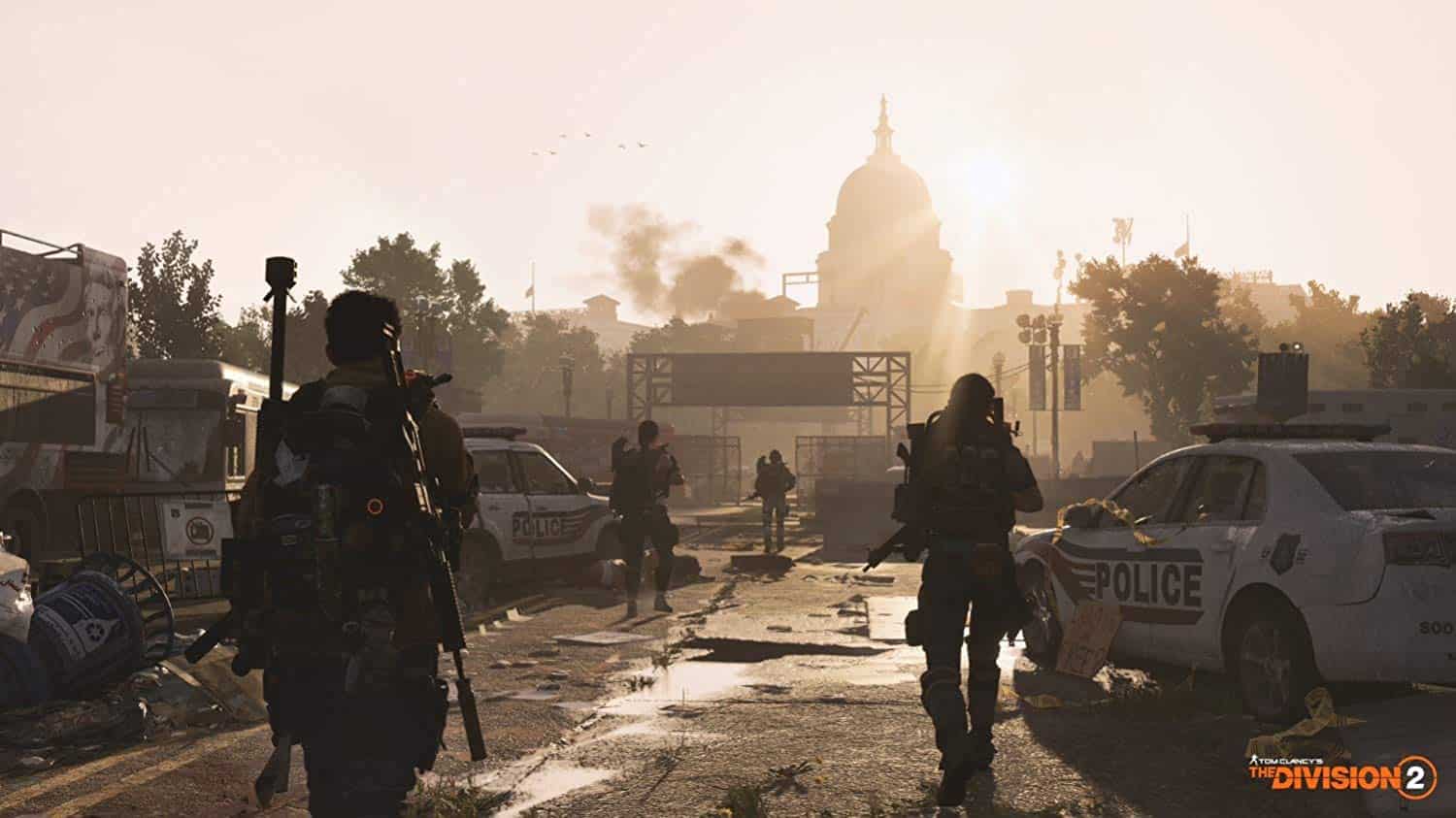 The long-term support for The Division 2 in particular demonstrates that the company does not reduce the brand exclusively to short-term sales.
While many online games receive few major content updates after a few years, The Division 2 has been expanded time and again.
This includes new activities, tweaks to the endgame, and additional story content.
This long-standing support builds trust, but it also brings expectations along with it.
After all, a new main installment must deliver a comprehensible added value compared to its content-rich predecessor.
Merely a new map and a few extra weapons would likely not suffice to prompt all existing players to make the switch permanently.
At the same time, Ubisoft finds itself under economic pressure.
Big-budget productions are expensive, and securing their long-term financing is becoming increasingly difficult.
The Division 3 is therefore likely an important project from an economic standpoint as well.
Whether Ubisoft can actually achieve success on par with the first game ultimately depends on how convincing the successor turns out to be.
What must The Division 3 absolutely retain?
Alongside potential innovations, there are certain characteristics that made The Division special in the first place.
These include the sensation of navigating a believable, collapsed metropolis.
The streets were not merely a backdrop; they told stories of their own.
Abandoned vehicles, makeshift shelters, empty apartments, and traces of former residents conveyed the feeling that a completely normal everyday life had once taken place here.
Small details contributed to this as well.
Audio logs, so-called ECHOes, and hidden pieces of lore expanded the backstory without requiring every encounter to be explained through a lengthy cutscene.
This exact form of environmental storytelling could play a major role in the third installment as well.
Added to this is the unique blend of realistic-seeming weapons and RPG elements.
The Division is neither a classic military simulation nor a conventional action shooter.
It is precisely this middle ground that makes the series interesting for many players.
A successful successor would therefore presumably not need to replace every familiar system, but rather build upon and evolve the existing strengths in a meaningful way.
How Massive Entertainment plans to strike this balance is not yet known.
What Ubisoft finally needs to show
More than three years after the announcement, an in-depth look at development would certainly be welcome.
A first proper gameplay trailer could answer several important questions all at once.
What does the new game world look like? What changes have been made to the combat system? What enemies await players? And how much does the technology evolve compared to The Division 2?
A presentation of the core game structure would also be interesting.
Is Ubisoft once again banking on a large open city with a central operations base, or is the studio daring to try a different concept?
What role do co-op, PvP, and long-term endgame activities play?
And above all: What makes The Division 3 a true successor rather than merely a technically polished version of the second game?
All of these questions remain unanswered so far.
That does not necessarily mean development is going poorly.
A studio can consciously choose not to showcase unfinished content to the public prematurely.
However, with each successive phase of radio silence, expectations grow as well.
The longer Ubisoft remains silent, the more the first proper reveal will have to deliver.
The Division 3 remains one of Ubisoft’s most exciting projects
As of November 2026, a relatively clear picture emerges.
The Division 3 is in development at Massive Entertainment and was described by the former executive producer as exceptionally ambitious.
At the same time, almost everything that interests players the most remains unconfirmed. There is no confirmed setting, no official release date, no finalized platform list, and no gameplay trailer.
Moreover, the numerous rumors concerning snow, a larger Dark Zone, new cities, or specific technical features have not been sufficiently substantiated to date.
 Personally, I am a massive fan of the franchise, particularly of the original The Division. I followed its development from the very beginning back then, participated in both the alpha and beta, and witnessed how the game transformed over the years. The atmosphere of snow-covered New York, in particular, remains etched in my memory to this day.
That is why I truly hope Ubisoft leans back into the strengths of the first part with The Division 3. Not simply bigger, flashier, and with even more gear, but with a game world that genuinely captivates you and draws you back in time and time again.
Because one thing is certain: The potential is there. Now Ubisoft just needs to show what is actually behind those big promises.
Let us know your opinion in the comments.