


About a week after BioWare’s closure, new details are emerging about the final months of the canceled *Mass Effect* project. According to a fresh report, developers removed a flag resembling an LGBTQ pride flag from presentation materials for Electronic Arts executives, fearing that the new leadership might reject such content.
The statements come from former BioWare employees, and EA has not yet confirmed them. The report nonetheless raises new questions about the development of Mass Effect: Universe, the studio’s creative direction, and the influence of EA’s new owners.
Mass Effect Universe Was Apparently to Be Presented Differently
French outlet BFM Tech broke the story. Reporter Sylvain Trinel interviewed former BioWare staff about the canceled role-playing game, then codenamed Mass Effect: Universe.
Das könnte dich auch interessieren



According to an anonymous former employee, the team revised certain content before presenting to EA’s new leadership. The issue centered on a flag that those involved felt resembled an LGBTQ pride flag too closely.
The developers reportedly feared that the symbol might provoke negative reactions from the new leadership, so they removed the flag from a presentation video to avoid conflict. The timing is notable: the studio was already struggling as Electronic Arts realigned its future strategy.
The team needed to convince management that further investment in Mass Effect was worthwhile, and a former employee suspects the presentation failed to impress senior leaders.
Whether the team actually removed the icon, who initiated the change, and EA’s role remain unclear from the statements so far. It is also important to distinguish between the actual game and the material intended for senior management. The report refers to an internal presentation. There is no evidence that such content was also supposed to be removed from the planned release.
Were the developers afraid of the new EA leadership?
The timing is notable: on August 4, 2026, a consortium of investors completed its acquisition of Electronic Arts. The group includes the Saudi Arabian sovereign wealth fund Public Investment Fund, Silver Lake, and Affinity Partners.
The deal not only reshuffled the ownership of one of the world’s largest publishers but also sparked industry-wide debate about the new owners’ potential influence on future games, especially at studios that have long addressed social issues in their narratives.
BioWare was among these studios. Both *Mass Effect* and *Dragon Age* have long offered players many opportunities to forge personal relationships and make choices within the game world. According to the former employee, some team members worried that certain content might not align with the new management’s vision.
However, journalist Sylvain Trinel told Kotaku that, according to his sources, the move was precautionary; the developers wanted to forestall any negative reactions. The report does not show a direct directive from the new owners.
That distinction matters. Deliberate management intervention could be seen as creative interference, whereas the team’s own precaution would not. Whether those fears were justified remains unclear.
BioWare and the Debate Over Sociopolitical Content
The debate has hit a studio long celebrated for its expansive role-playing narratives.
Even earlier BioWare games let players build personal relationships with multiple characters and make choices that shaped the story. With *Mass Effect* and *Dragon Age*, the studio expanded those options. 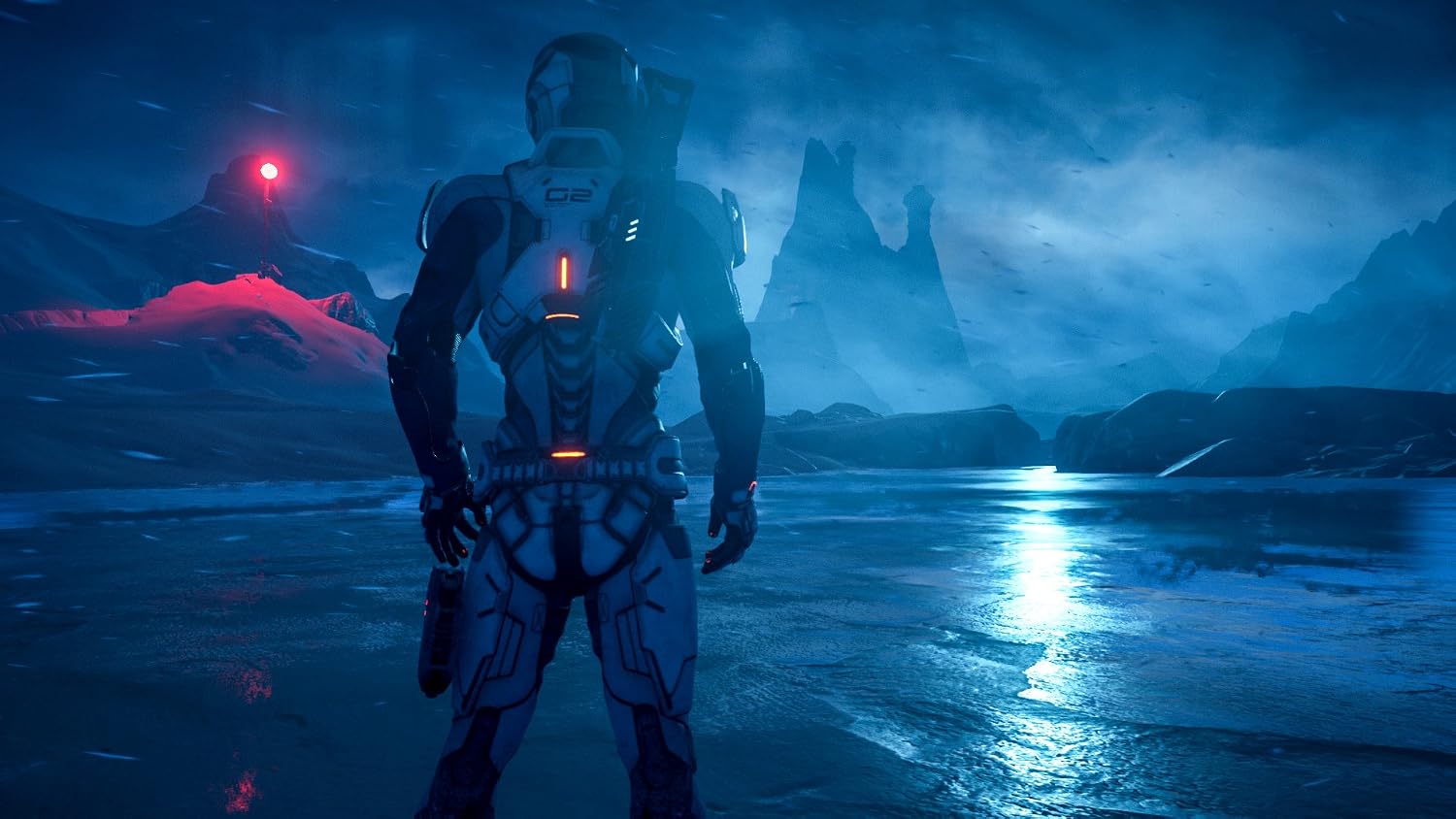 Political conflicts, moral decisions, personal fates, and romantic relationships between characters all played a role.
Depending on the game and character, same-sex relationships were also possible. Such elements were part of the narrative concept of numerous BioWare role-playing games. At the same time, the growing importance of sociopolitical themes within the gaming industry was repeatedly the subject of controversy. From our perspective, the increasing focus on sociopolitical messages has done more harm than good to many games. At BioWare, too, the impression increasingly arose that such themes were, in some cases, becoming more important than what really matters: a strong story, believable characters, and good gameplay. However, it should not be overlooked that BioWare’s earlier successes were also fueled by complex characters, personal relationships, and the freedom to make one’s own decisions.
It is unclear how much these elements would have shaped Mass Effect: Universe. The current report indicates that the development team was uncertain about how new leadership would receive certain content, but it does not prove that sociopolitical themes caused the cancellation.
The next Mass Effect was canceled shortly thereafter
The story is especially explosive in light of the events of October 21, 2026, when BioWare officially confirmed the studio’s closure and the end of development on the next Mass Effect, marking the end of a three-decade history of well-known role-playing games.
Its other major franchises included Baldur’s Gate, Neverwinter Nights, and Star Wars: Knights of the Old Republic. As we previously reported, the closure tied to Electronic Arts’ strategic realignment, which shifted resources to a smaller set of projects.
From an economic standpoint, this strategy makes sense. Major role-playing games now devour enormous sums of money, and development can stretch over many years. At the same time, the question arises of how a company should handle established brands and long-standing development teams. After all, Mass Effect was one of the industry’s best-known role-playing game series for many years.
A former BioWare employee suspects that the Mass Effect: Universe presentations failed to secure continued funding from the new leadership, and the studio’s creative profile may have been a factor. This remains unconfirmed.
There is no proven direct link between the alleged removal of the flag and the game’s subsequent cancellation. Nor is there any solid evidence that Electronic Arts canceled the project because of its LGBTQ content. The officially communicated decision primarily concerns the publisher’s strategic and economic direction.
New Information About the Canceled Mass Effect Universe
Beyond the presentation debate, statements from former employees offer more details on the canceled RPG. They say Mass Effect: Universe was set roughly 600 years after the original trilogy.
The story would have introduced a new protagonist while linking to familiar characters and events from earlier entries. Liara T’Soni, one of the series’ most iconic figures, was set to reprise her role. The team also planned to fold in decisions made in previous games, a choice that would have posed a significant challenge.
In the original Mass Effect trilogy, player choices shaped character arcs, political outcomes, and even the fate of entire species, so reconciling those divergent plot paths in a new entry would have posed a daunting technical and narrative challenge. The planned centuries-long time jump only compounded the difficulty.
However, a new protagonist and an altered universe would have let the team tell a standalone story.
Unreal Engine Instead of Frostbite
The team also planned major technical changes. Former developers say BioWare chose the Unreal Engine for *Mass Effect: Universe*, a shift away from the Frostbite Engine used in *Mass Effect: Andromeda*. The switch was meant to streamline development.
Interviewed former employees said development was proceeding satisfactorily, even though some internal deadlines slipped—a common issue for large RPGs. The team reportedly targeted a late 2028 release window.
No official release schedule was ever confirmed. Even so, the details show that BioWare had already invested heavily in the franchise’s narrative and technical future. Available reports still don’t make clear how far development progressed or which components were implemented in a playable form.
An unreleased trailer had already attracted attention
Further insights into the canceled project emerged just a few days after BioWare’s closure. At that time, an unreleased trailer for *Mass Effect: Universe* surfaced online. As we reported on PSINFO in our article about the mysterious trailer for the canceled *Mass Effect*, the footage showed various scenes from the planned role-playing game.
It was early development footage, not a finished release trailer, yet it hinted at BioWare’s intended direction for the series.
The newly published statements from former employees reinforce that impression.
Perhaps most interesting, technical challenges alone did not doom the project. Anonymous developers claim that the new management team’s dwindling confidence in the game’s commercial prospects also played a significant role. No independent sources have yet confirmed the specific decision-making processes.
Fans Continue Their Protests Against Electronic Arts
As more details about the canceled role-playing game emerge, discontent within the Mass Effect community continues to grow over Electronic Arts’ decision. Under the hashtag #SaveMassEffect, fans are campaigning for the series’ development to continue.
Some hope EA will change its mind, while others want at least a long-term plan for the franchise. The accompanying petition gathered more than 250,000 signatures within six days. We detailed this development and compared it with the PlayStation Disc protest yesterday on PSINFO.
The rapid growth of the campaign shows how much Mass Effect still matters to fans. However, a high signature count does not guarantee that a financially canceled project will resume.
To revive the franchise, EA would need to invest substantial funds, reassemble a capable development team, and outline a long-term strategy for the brand. It is unclear whether the publisher is willing to do so. The closure of BioWare further complicates any chance of a sequel.
How much influence should sociopolitical issues have on games?
The new allegations also raise a fundamental question that extends far beyond *Mass Effect*. To what extent should sociopolitical issues be taken into account in the development of major video games, and what role should the economic or political expectations of corporate leadership play in this process?
Video games have long told a wide variety of stories. Personal relationships, social conflicts, and moral decisions can sit alongside classic action, exploration, and role-playing elements.
It becomes problematic when such messages overshadow the gameplay or when creative choices mainly serve external expectations. However, this also raises the question of whether developers should alter their original ideas out of fear of potential negative reactions from investors or decision-makers.
For a long-standing RPG franchise like Mass Effect, creative freedom is likely part of what many players expect. Whether BioWare faced such pressure in this case remains unproven, but statements from former employees indicate concerns about the new leadership’s reaction.
What does this mean for the future of Mass Effect?
More than a week after BioWare’s official closure, the future of Mass Effect remains uncertain. The most recently developed role-playing game has been canceled, the studio responsible has been shut down, and development work has been halted.
It is currently impossible to say whether Electronic Arts will commission a new Mass Effect in the long term. The brand itself, however, remains part of EA’s extensive game portfolio. This means that a return at a later date is not ruled out in principle. For now, however, fans must accept that Mass Effect: Universe will not be released in its previously planned form.
A recent report about an allegedly removed LGBTQ symbol adds another chapter to the story of the last few months of development. At the same time, statements from former employees should not be confused with officially confirmed corporate decisions.
So far, there is no evidence that EA’s new owners ordered the removal of such content or that the alleged change affected the cancellation. The long-established studio behind it created successful role-playing games for decades before EA shut it down as part of a comprehensive business restructuring.
Now we want to hear your thoughts: Should developers prioritize gameplay and storytelling over sociopolitical messaging, or do you believe such themes belong in modern RPGs? Source: Thegamer. Share your views in the comments.